Every Benefit Your Disabled Child May Qualify for in California
If your child has been diagnosed with a developmental disability, physical disability, or significant health condition, California offers a remarkably comprehensive network of support programs. The challenge is knowing where to start and understanding which programs your child may qualify for. This guide walks you through every major benefit program available—from monthly cash assistance to in-home care support to educational services.
Important Note: This list is for general reference. Programs change, eligibility requirements are updated, and qualification depends on many individual factors including income, disability type, age, and citizenship status. Always verify directly with the relevant agency before making plans based on any program described here.
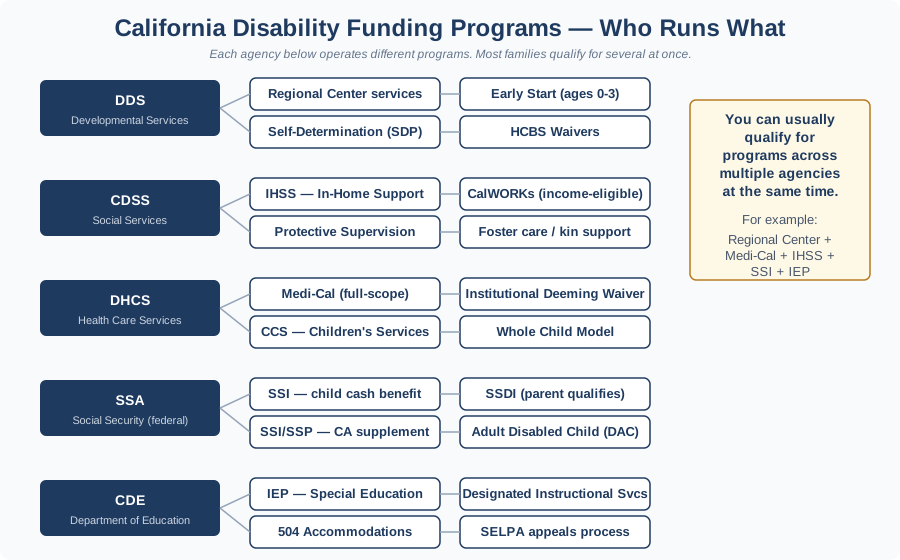
1. Regional Center Services
California's Regional Centers are the gateway to almost everything else. These are non-profit organizations that coordinate services and supports for people with developmental disabilities. Your child may qualify for a free assessment and an Individualized Program Plan (IPP) that maps out available services. Regional Centers typically serve children with intellectual disabilities, cerebral palsy, autism, epilepsy, and related conditions. Once your child is found eligible, Regional Centers can help you access funding for day programs, employment services, residential support, and respite care. Contact your local Regional Center to request an evaluation—it's free and often the first step families take.
Find your local Regional Center →
2. IHSS (In-Home Supportive Services)
IHSS is a program that pays family members or hired caregivers to provide in-home care for people with disabilities—including children. If your child needs help with personal care, household tasks, or supervision, you may potentially be eligible to receive payment as your child's caregiver. This is often an attractive option for families where one parent reduces work hours to provide care. Income and resource limits apply, but many families find that IHSS makes at-home care financially feasible. The program covers costs that would otherwise come out of pocket, making it easier for parents to stay home while their child receives necessary support.
Learn about IHSS eligibility →
3. SSI/SSP (Supplemental Security Income and State Supplementary Payment)
SSI provides monthly cash benefits to disabled children whose family's income and resources fall below federal limits. The benefit amount (SSI) is set by federal law, and California adds additional money through SSP (State Supplementary Payment). For a disabled child, SSI can amount to several hundred dollars per month—money families can use for the child's care, therapy, equipment, or other needs. Eligibility requires meeting the Social Security Administration's definition of disability and passing income/resource tests. Many children with autism, cerebral palsy, intellectual disabilities, and other conditions qualify. You apply through your local Social Security office or at ssa.gov.
4. Medi-Cal (California's Medicaid)
Medi-Cal covers medical care for low-income individuals and families. A child with a disability may potentially qualify for Medi-Cal based on their own SSI eligibility (called "SSI-related" Medi-Cal) or through the family's income, depending on the child's age and status. Medi-Cal covers doctor visits, hospital care, therapy, medications, equipment, and many specialized services not covered by private insurance. For children with disabilities, Medi-Cal is often the primary payer for developmental services, autism therapy, and specialized medical equipment. Coverage can continue even when SSI stops at age 18 if the child remains disabled. Apply through Covered California or your county social services office.
Explore Medi-Cal for your child →
5. Early Start (Birth-3 Services)
If your child is under age 3 and has a developmental delay or qualifying condition, California's Early Start program may provide free or low-cost services. Early Start includes speech therapy, physical therapy, occupational therapy, developmental services, and family counseling. Services are provided in your home or community setting by a coordinator and team of specialists. Eligibility is based on developmental delay or having certain diagnosed conditions—no income limits apply. Research shows early intervention is highly effective, and Early Start is often a family's first step. You can request an evaluation through your local Regional Center or First 5 office.
6. HCBS Waivers (Home and Community-Based Services)
HCBS Waivers allow people with developmental disabilities to receive care and support in their home or community rather than in institutions. Your child may potentially be eligible to receive funding for supported living, day programs, employment services, respite care, and environmental modifications. The two waivers most relevant to children are the DDS HCBS waiver, which runs through your Regional Center, and the Home and Community-Based Alternatives (HCBA) waiver, which runs through the Department of Health Care Services for children with nursing-facility-level medical needs. The DDS waiver generally has no waiting list, but the HCBA waiver does, so applying early is important. Families appreciate that waivers fund supports tailored to their child's actual life and community participation.
7. Self-Determination Program (SDP)
SDP is California's program that gives families more control over how Regional Center funding is used. Instead of the Regional Center directly paying providers, families receive a budget and manage their own support team. This approach works well for families who want flexibility to hire specific providers, adjust services quickly, or try different supports. Your child may be eligible if served by a Regional Center. SDP requires more administrative responsibility (hiring, payroll, record-keeping) than having the Regional Center manage everything, but families gain significant autonomy. Many families find SDP allows their child to receive more personalized support.
8. CalABLE Accounts (Tax-Free Savings)
CalABLE lets families save money for a disabled child without losing SSI or Medi-Cal eligibility. Normally, saving money disqualifies children from means-tested benefits, but CalABLE accounts are protected. You can contribute up to $20,000 per year (2026 limit), and the account grows tax-free. Funds can be used for disability-related expenses like education, employment, healthcare, and living expenses. CalABLE is ideal for families who receive gifts, tax refunds, or want to set aside money for future care. Your child may qualify if they have a disability that began before age 46 (raised from age 26 by the federal ABLE Age Adjustment Act, effective January 1, 2026). Opening an account takes minutes online at able.ca.gov.
Learn about CalABLE Accounts and Special Needs Trusts →
9. School District Services (IEP and 504 Plans)
Your child may be entitled to free special education services and accommodations through the public school district. If your child has a disability that affects learning, a school evaluation may lead to an Individualized Education Program (IEP), which guarantees services like specialized instruction, speech therapy, occupational therapy, assistive technology, and behavioral support. If your child doesn't qualify for an IEP but has a disability, a 504 Plan provides classroom accommodations. Services must start at age 3 and are completely free. School districts coordinate with Regional Centers and other agencies. Request an evaluation by submitting a written request to your school principal or special education director.
Understand IEPs and 504 Plans →
10. California Children's Services (CCS)
CCS serves children under 21 with serious physical health conditions (not developmental disabilities, though some conditions overlap). If your child has hemophilia, sickle cell disease, cystic fibrosis, severe burns, cleft palate, or similar serious physical conditions, CCS may provide medical services, rehabilitation, equipment, and specialty care. CCS works with your private insurance and covers costs insurance doesn't. Some families qualify at higher income levels if the child has a qualifying condition. Services are coordinated through your county health department. Eligibility and coverage vary by condition, so contact your local CCS program to learn if your child may qualify.
11. Tax Benefits (Deductions and Credits)
Families of disabled children may potentially claim tax deductions for dependent care expenses and potentially claim the Disabled Access Credit. Additionally, some families qualify for the Earned Income Tax Credit (EITC) or Child Tax Credit, which can deliver hundreds or thousands in refunds. Some costs paid for your child's care may be deductible. Tax rules are complex and change yearly, so consulting a tax professional familiar with disability benefits is worthwhile. The IRS and disability organizations publish resources, and free tax preparation is available through VITA (Volunteer Income Tax Assistance) programs. Don't leave money on the table—exploring tax benefits is an important part of planning.
Explore all California funding options →
What Comes Next?
The programs above represent California's comprehensive safety net for children with disabilities. While it's a lot to navigate, you don't have to do it alone. Your local Regional Center is the best starting point—staff there understand how programs work together and can guide you toward what your child may qualify for. Many families find that combining multiple programs (SSI for cash, Medi-Cal for healthcare, Regional Center services, and school services) creates a solid foundation of support. Allow time for applications and evaluations; some processes move slowly, but persistence pays off. Every program has rules, income limits, and eligibility criteria that vary. Circumstances change, so reviewing your plan annually ensures your child continues receiving all available benefits.
Key Points to Remember
- Start with your local Regional Center—it's the hub for coordination
- Your child may potentially qualify for multiple programs simultaneously
- Income limits and resource limits vary significantly by program
- Application processes are free, but take time
- Programs change, so verify current eligibility requirements directly with each agency
- Advocacy and persistence matter—many families must apply multiple times
- Your child's disability, age, and family income determine actual eligibility